The Young Founders Challenge is proving that teenagers can do a lot more than just “think about” the future. They can build it.
Let’s be honest. Most school projects end the same way: you make a poster, you present it to your class, the teacher gives you a grade, and then… it goes in the bin.
But what if your school project was real? Like, actually real.
What if instead of pretending to start a business, you actually found a problem in your community, built a working solution, created a brand, sold it to real people, and then stood in front of real investors asking for real money?
That’s not a movie. That’s the Young Founders Challenge (YFC) and it’s happening right now.
So, What Exactly Is YFC?
The Young Founders Challenge is a program run by CMR and Ekya Schools where students from Grades 8 to 12 (and PU) stop learning about entrepreneurship and start doing it.
Here’s the simple version:
- You join a team of 5 students.
- You pick a real problem worth solving.
- You research it, talk to real people, build a prototype, create a brand, and try to sell it.
- If your idea is strong enough, you pitch it to real investors and entrepreneurs for real funding.
This isn’t a school play. This isn’t a pretend competition. Just you, a problem you care about and the chance to build something that didn’t exist before.
It Starts With a Question
Most people start with: “What cool thing can I make?”
YFC flips that. You start by asking:
“What problem is worth solving?”
Maybe it’s making clean water easier to access. Maybe it’s helping students manage stress. Maybe it’s making roads safer or reducing waste in your neighbourhood.
The problems are grouped into big themes like:
- Learning & Future Skills
- Health, Wellness & Lifestyle
- Smart Communities & Mobility
- Environment, Energy & Climate
- Engineering a Better Future
You pick one. Then you go out and actually talk to people who face that problem. You interview them. You research. You figure out what’s already out there and why it’s not good enough.
The Four Big Steps
The whole challenge is built around four stages. Think of it like levels in a game:
- Find a Real Problem
You investigate. You talk to users. You understand who you’re building for. You don’t guess, you learn.
- Build a Viable Product
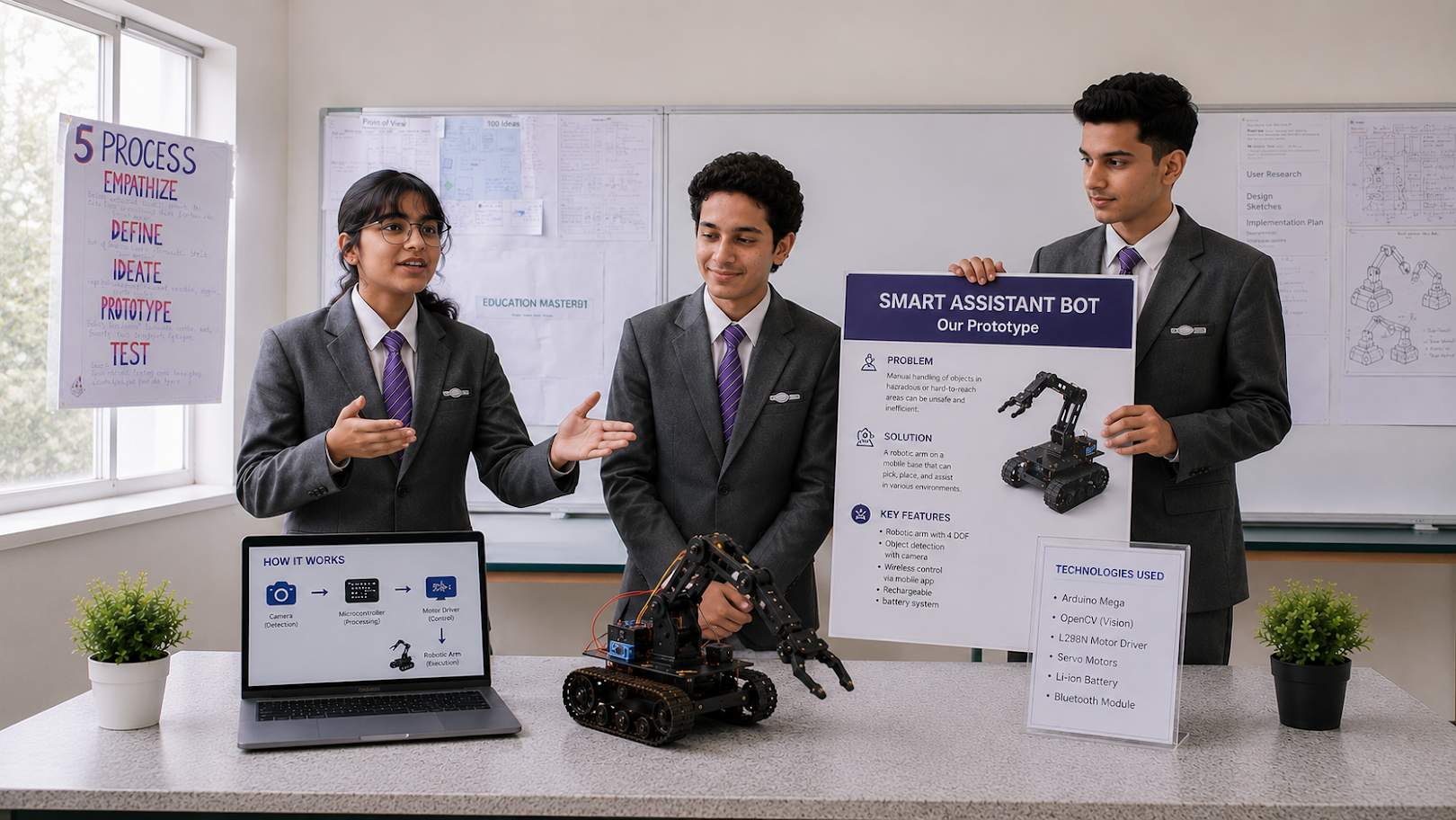
You take your idea and turn it into something that actually works. Not a drawing. Not a description. A prototype that you can test and show to people.
- Build a Brand & Sell
You name your product. You design a brand. You figure out how much it costs, who will buy it, and how you’ll reach them. Then you go out and try to get real customers.
- Pitch for Investment
You put everything together, the problem, your solution, your working product, your business plan and you pitch it to a panel of investors.
The Journey: From 600 Teams to Top 20
This year, more than 600 teams across campuses are taking part. But not everyone makes it to the end. Here’s how the selection works:
Stage | What Happens | Who Moves Forward |
Phase I – Round 1 (Jul 6 – Aug 29) | All teams submit a video pitch + prototype demo | Top 75 teams |
Phase I – Round 1 (Jul 6 – Aug 29) | Top 75 pitch live at their campus | Who Moves Forward |
Phase I – Round 2 (Aug 29 – Sep 19) | Campus Showcase + live jury pitch | Top 40 teams |
Phase II (Sep 19 – Oct 31) | Campus Showcase + live jury pitch | Top 20 teams |
Phase III (Oct 31 – Nov 27) | Advanced mentorship + pitch refinement | Top 20 prepare for finale |
Investor Pitch Finale (Nov 28, 2026) | Live pitch to investors & entrepreneurs | Real funding awarded |
At every step, you’re judged on:
- Did you finish your weekly tasks?
- How good are your submissions?
- Does your prototype actually work?
- Is your pitch clear, backed by evidence, and delivered well?
You’re Not Alone
Building something from scratch is hard. That’s why YFC surrounds every team with people who’ve done it before:
- Learning Facilitators – Teachers who guide you through every phase.
- Product Coaches – Experts who help you design and build your prototype.
- Venture Coaches – Business pros who help you with branding, pricing, and your pitch.
- Founder Mentors – Real entrepreneurs who give you 1-on-1 advice as you get closer to the finale.
They don’t give you the answers. They ask you the right questions so you learn to think like a founder.
Built With AI, But Still Your Work
YFC uses a platform called Elevante.ai to help teams manage everything- submissions, feedback, research, and more. Students also learn to use AI tools to help with customer research, prototyping, branding, and pitch prep. But here’s the important part: AI is a tool, not a replacement. The ideas, the work, and the effort have to be yours. Use AI to help you think faster. Don’t let it do the thinking for you.
Why This Matters (Even If You Don’t Win)
Here’s the truth: most startups fail. Most prototypes break. Most first ideas don’t work.
And that’s exactly the point.
YFC is designed so you can fail safely, learn quickly, and keep building. Every time your prototype breaks, every time a customer tells you something you didn’t expect, every time your pitch gets torn apart, you learn something no textbook can teach you.
By the end, the most powerful thing you might say isn’t “We won.”
It’s:
“We built this.”
Who Can Join?
- Students in Grades 8 to 12 (ages 13–18)
- You don’t have to be from CMR or Ekya, it’s open to all schools
- You need curiosity, a willingness to build, and either an idea or the drive to find one.
The Big Day: November 28, 2026
After months of researching, designing, prototyping, testing, selling, and refining, the Top 20 teams will take the stage at the Investor Pitch Finale. They’ll present their ventures to a panel of real investors and entrepreneurs. And the strongest ideas? They’ll walk away with real funding to keep building. This isn’t a school play. This isn’t a pretend competition. This is what it actually feels like to turn an idea into something real.
The Bottom Line
The Young Founders Challenge isn’t about getting a good grade. It’s about discovering that you’re capable of creating something that didn’t exist before.
It’s about learning to notice problems, listen to people, build solutions, and tell your story with confidence.
So if you’ve ever looked at something in the world and thought, “Someone should fix that”- maybe that someone is you.
Find a problem. Build. Test. Learn. Refine. Pitch.
And on November 28, 2026, watch what happens when student ideas stop being ideas and start becoming something real.
Want to be part of it? Whether you’re a student ready to build, or an experienced professional who wants to mentor the next generation of founders, there’s a place for you in the Young Founders Challenge.
Let’s build something.
Take the first step. Register here → Link