Literature is often perceived as a subject that revolves around reading stories, understanding poems, analysing characters and preparing for examinations. However, its purpose extends far beyond the boundaries of a textbook or classroom. At its heart, literature is an invitation to think, question, interpret and understand the world through different perspectives. Every story carries an experience, every poem expresses an emotion, and every character presents an opportunity to examine human behaviour.
In an age where information is readily available, and opinions are constantly shared, the ability to think critically has become more important than ever. Literature provides students with a unique space to develop this ability, encouraging them not merely to accept what they read but to question, interpret and form independent opinions.
Beyond Reading: Learning to Question
One of the greatest contributions of literature to education is its ability to encourage questioning. A literary text rarely offers a single, straightforward interpretation. Two students reading the same story may arrive at entirely different conclusions depending on their experiences, observations and understanding.
Consider a story that explores the relationship between tradition and modernity. Rather than simply identifying the central theme, students can be encouraged to question the beliefs and assumptions presented in the narrative. Are traditional practices always meaningful? Should scientific reasoning replace long-held beliefs? Is there a possibility of finding a balance between the two?
Such discussions transform reading into an active intellectual exercise. Students learn that understanding a text involves looking beyond its surface meaning, examining the circumstances surrounding it and evaluating the choices made by its characters.
This ability to question what is presented before them is not limited to literature. It becomes an essential skill when students encounter information in newspapers, social media, academic discussions and everyday conversations.
Understanding Different Perspectives
Literature also introduces students to experiences beyond their immediate surroundings. Through stories, poems and plays, they encounter people from different cultures, backgrounds, generations and social circumstances.
A character’s actions may initially appear unreasonable, but understanding the circumstances that influence those actions can change the reader’s perception. A story about poverty, discrimination, gender inequality or social injustice encourages students to look beyond their own experiences and recognise the realities faced by others.
This develops empathy, which is an important aspect of emotional and social intelligence. Students gradually understand that people may hold different opinions and make different choices because of their circumstances.
In a diverse society, the ability to listen without immediately judging, understand without necessarily agreeing and respect perspectives different from one’s own is invaluable. Literature creates opportunities to practise these qualities in a meaningful way.
The Classroom as a Space for Independent Thinking
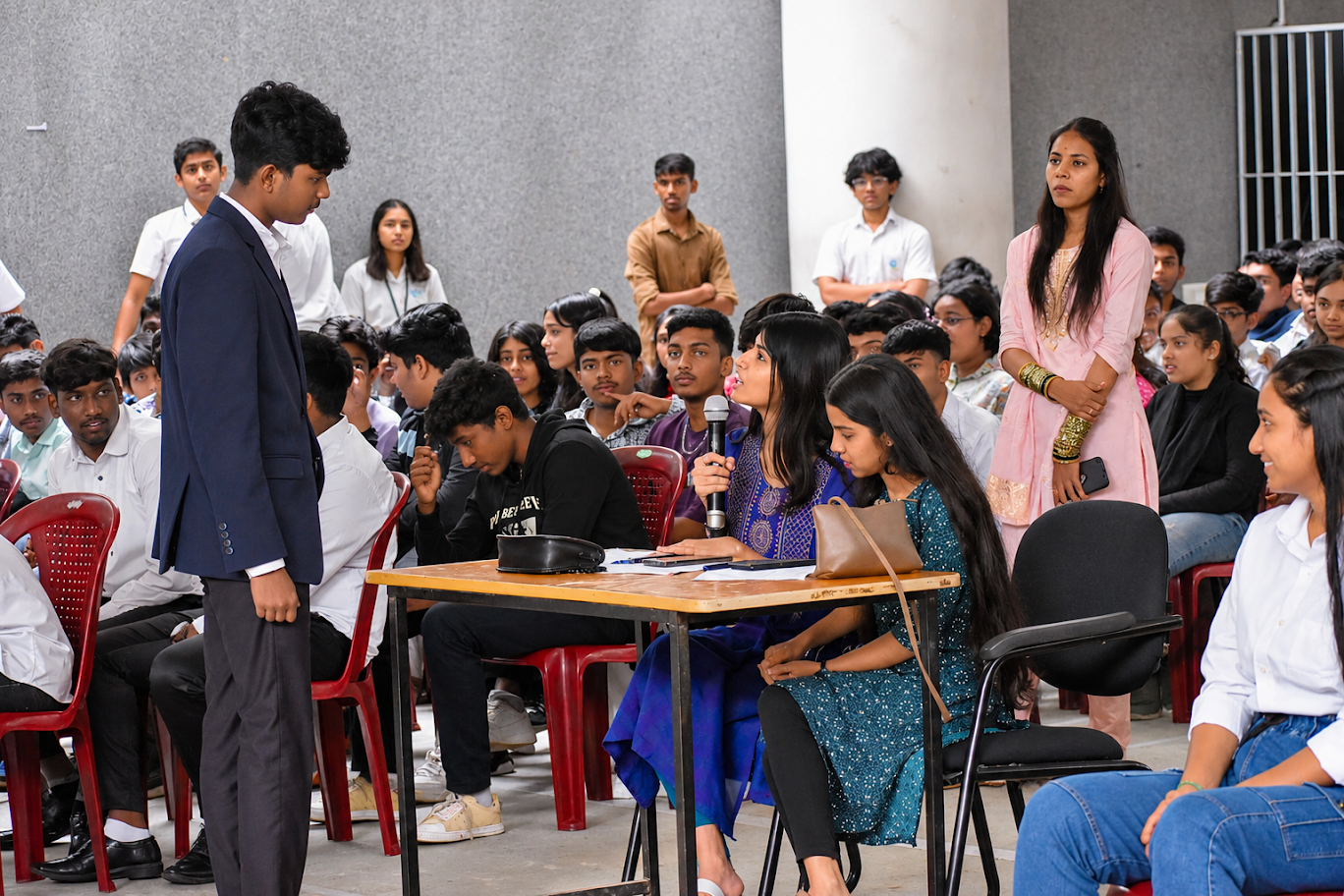
The teaching of literature becomes particularly meaningful when students are encouraged to participate rather than simply receive information. A classroom discussion should not always revolve around finding the one expected answer. Instead, it should allow students to explain their interpretations, support their arguments and respectfully challenge opposing viewpoints.
Questions such as “Do you agree with the protagonist’s decision?”, “Would you have acted differently?” or “Is the message of this poem relevant in today’s society?” encourage students to connect literary ideas with real-life situations.
Activities such as debates, group discussions, reflective writing and alternative endings to stories can further strengthen this process. When students are given the freedom to express their thoughts, they begin to recognise the value of their own voices.
Importantly, critical thinking does not mean disagreeing for the sake of disagreement. It involves examining evidence, considering alternatives, identifying assumptions and arriving at reasoned conclusions. Literature provides an engaging environment in which these abilities can develop naturally.
Literature and the Challenges of the Modern World
Today’s students live in a world shaped by digital communication, rapidly changing technologies and an overwhelming amount of information. While access to information has become easier, distinguishing reliable information from misleading content requires careful judgement.
The analytical skills developed through literature can help students navigate this environment. When they examine a narrator’s reliability, identify bias, interpret symbolism or question a character’s motives, they are practising skills that are equally relevant outside the classroom.
For instance, understanding how a narrator presents a particular event can help students recognise that information is sometimes shaped by the perspective of the person communicating it. Similarly, analysing conflicting viewpoints in a literary text encourages them to consider multiple sides of an issue before forming an opinion.
Thus, literature is not disconnected from modern life. It equips students with the intellectual tools needed to engage with it thoughtfully.
Lessons That Stay Beyond the Classroom
The true value of literature lies not merely in how well students remember a story or reproduce an answer in an examination, but in how the ideas they encounter influence their understanding of life.
A poem may teach them to appreciate nature. A story may challenge their understanding of social inequality. A character’s struggle may remind them of the importance of courage, perseverance or compassion. These lessons may not always have immediate or measurable outcomes, but they contribute to the gradual development of an individual’s personality and worldview.
Literature also reminds students that the world is complex and that not every question has a simple answer. It teaches them to be comfortable with uncertainty, consider different possibilities and approach unfamiliar situations with an open mind.
Conclusion
Education should not simply prepare students to answer questions; it should prepare them to ask meaningful ones. Literature plays a significant role in this process by creating opportunities for reflection, discussion and independent thought.
As educators, our responsibility is not limited to explaining the meaning of a text or preparing students for examinations. It also involves helping them discover the ideas, questions and experiences hidden within the pages they read.
Long after a student has forgotten the details of a particular chapter, the ability to question an assumption, understand another person’s perspective or express an independent opinion can remain with them.
Perhaps that is the greatest lesson literature offers: its influence does not end when the book closes. It continues in the way we think, the way we understand others and the way we engage with the world.
Author: Samantha Coelho
Lecturer
English Department
CMR NPU HRBR